

The Shanghai Cooperation Organization (SCO) Summit 2025 wrapped up in Tianjin, China, drawing leaders from across Asia and beyond. Held from August 31 to September 1, this gathering marked a big moment for the group, now in its 25th year. With talks on trade, security, and tech, the event highlighted how countries like China, Russia, and India are teaming up more closely. Over two days, heads of state pushed for stronger ties amid shifting global dynamics. The summit also spotlighted Iran’s growing role as a key player, with its president advocating for ways to blunt Western sanctions.
Background of the SCO
The SCO started as a way for neighboring countries to work together on shared problems. It’s grown into a major player in regional affairs, focusing on peace and growth.
Origins and Growth
Back in 1996, China, Russia, Kazakhstan, Kyrgyzstan, and Tajikistan formed the Shanghai Five to sort out border issues and build trust. They signed deals to cut military forces along borders and fight threats like terrorism. By 2001, Uzbekistan joined, and the group became the SCO with a formal charter. The aim was simple: promote stability through talks and joint efforts.
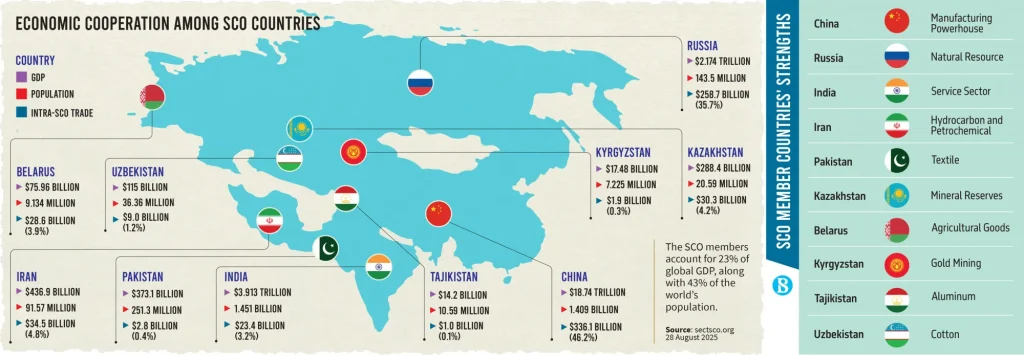
Over the years, the SCO expanded. India and Pakistan came on board in 2017, Iran in 2023, and Belarus in 2024. Today, it covers a huge chunk of the world about 40% of the global population and a big slice of Eurasia’s land. The group’s motto, the “Shanghai Spirit,” stresses mutual respect and win-win deals. Annual summits like the one in 2025 keep the momentum going, with decisions made by consensus. Iran’s recent full membership has added weight, positioning it as a bridge between Central Asia and the Middle East, especially in energy and trade routes.
Structure and Key Bodies
The SCO runs on a clear setup. The Heads of State Council is the top body, meeting yearly to set big picture goals. Below that, the Heads of Government Council handles budgets and economic plans. Foreign ministers meet often to prep for summits, while national coordinators keep day to day work smooth.
There’s also the Secretariat in Beijing, led by Secretary General Nurlan Yermekbayev from Kazakhstan since early 2025. For security, the Regional Anti-Terrorist Structure (RATS) in Tashkent shares info on threats like extremism. Official languages are Chinese and Russian, making communication straightforward among members. This structure has helped the SCO evolve into a platform where members like Iran can push for practical steps against external pressures, such as sanctions.
Key Players at the 2025 Summit
Tianjin hosted over 20 leaders, making it the largest SCO event yet. China chaired the meeting, with President Xi Jinping welcoming guests at the Meijiang Convention Center. Iran stood out as a key player, using the summit to highlight its push for economic resilience and regional stability.
Host China and Xi Jinping
As host, China pulled out all the stops. Xi hosted a banquet with cultural shows, including displays of Tianjin’s heritage like Yangliuqing paintings. He met one on one with many leaders, pushing for closer bonds. China unveiled the summit’s logo back in January 2025, signaling its focus on the event. Xi’s speeches emphasized a vision for a fairer global setup, drawing on years of Chinese diplomacy to rally members around shared goals.
Russia and Vladimir Putin
Russian President Vladimir Putin attended, strengthening ties with China. He and Xi discussed energy and tech deals, reaffirming their partnership. Putin also joined a military parade in Beijing right after, marking WWII’s end. His remarks critiqued Western dominance, positioning the SCO as an alternative force in global affairs. This stance resonates with Russia’s long-term strategy to counterbalance U.S. influence through groups like the SCO.
India and Narendra Modi
Indian Prime Minister Narendra Modi made headlines with his first China visit in seven years. He chatted warmly with Xi and Putin, even riding in Putin’s limo. Amid U.S. tariffs on Indian goods over Russian oil buys, Modi’s presence showed India’s independent streak. Modi and Putin’s meeting reaffirmed the deep-rooted India-Russia bond, built on decades of defense and energy ties. Despite ongoing border tensions with China, Modi used the summit to explore better economic links, signaling India’s balancing act between East and West. India’s relations with China and Russia have warmed amid these pressures, with Modi calling Putin a “dear friend” and stressing mutual support in tough times.
Iran as a Key Player
Iran emerged as a standout participant, with President Masoud Pezeshkian attending his first major international summit since taking office. As a full member since 2023, Iran used the platform to advocate for stronger economic tools within the SCO to counter Western sanctions. Pezeshkian proposed special accounts and settlement systems to ease trade barriers, aiming to reduce the bite of unilateral penalties. His calls aligned with the group’s focus on multipolar cooperation, positioning Iran as a vital link in energy corridors and anti-sanctions efforts. Iran’s involvement adds depth to the SCO, bringing Middle Eastern perspectives to Eurasian discussions.
Other Members and Guests
Leaders from Kazakhstan, Kyrgyzstan, Tajikistan, Uzbekistan, Pakistan, and Belarus were there. Observers like Mongolia and dialogue partners such as Turkey and Vietnam joined too. Guests from groups like the UN added a global touch.
| SCO Member States | Year Joined | Key Leader at Summit |
| China | 2001 | Xi Jinping |
| Russia | 2001 | Vladimir Putin |
| Kazakhstan | 2001 | Kassym-Jomart Tokayev |
| Kyrgyzstan | 2001 | Sadyr Japarov |
| Tajikistan | 2001 | Emomali Rahmon |
| Uzbekistan | 2001 | Shavkat Mirziyoyev |
| India | 2017 | Narendra Modi |
| Pakistan | 2017 | Shehbaz Sharif |
| Iran | 2023 | Masoud Pezeshkian |
| Belarus | 2024 | Alexander Lukashenko |
This table lists the 10 members, their join dates, and summit attendees. The group now holds sway over 20% of world oil and 44% of natural gas reserves, with Iran’s resources boosting these figures.
Main Talks and Decisions
The summit buzzed with discussions on real world issues. Leaders signed the Tianjin Declaration, outlining plans for the next decade. Geopolitical themes dominated, with calls for a new global order and critiques of Western-led systems.
Economic Cooperation
A standout move was greenlighting an SCO Development Bank. China has pushed for this for years to fund roads, pipelines, and other projects without Western strings. Xi pledged billions in aid and loans to members. Talks covered trade in local currencies to dodge U.S. dollar reliance. Pezeshkian highlighted Iran’s interest in these mechanisms to lessen sanctions’ impact, suggesting joint financial tools for smoother transactions among members.
Energy was big too. Russia and Central Asian states shared updates on gas lines like the China Central Asia pipeline. India eyed better links for trade, while Pakistan highlighted its role in regional routes. Iran’s proposals for anti-sanctions measures tied into these, aiming to protect energy flows from external disruptions.
Security and Anti-Terror Efforts
Security topped the agenda, with RATS leading on counter-terror drills. Members vowed to tackle the “three evils” terrorism, separatism, and extremism. Joint exercises like Peace Mission help build readiness.
Geopolitics loomed large. Leaders called for a multipolar world, subtly critiquing U.S. dominance. They stayed neutral on Ukraine but stressed dialogue. Iran pushed for more anti-terror coordination, while Belarus brought European angles. The summit’s messages emphasized unity against outside interference, with Pezeshkian noting how sanctions hinder collective security efforts.
Push for a New Global Order
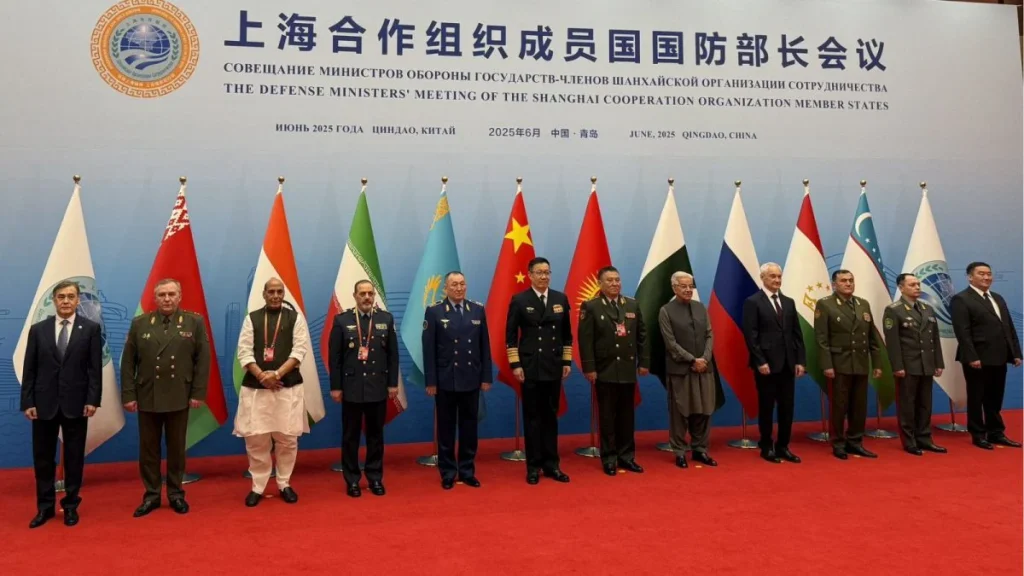
Xi Jinping led the charge for a “new world order,” urging a system that gives more voice to the Global South. He spoke of resisting Cold War mindsets and building fairer international rules, flanked by Putin and Modi. This vision builds on China’s long push for multipolarity, where emerging powers share the stage equally. Putin’s opposition to a “Western-centric world order” echoed this, accusing the West of imposing a “dictatorship” in global affairs. He praised the SCO as a foundation for Eurasian security, free from Euro-Atlantic alliances. These statements reflect deeper shifts, as Russia seeks alternatives amid its Ukraine conflict.
India’s Balancing Act and Trump’s Response
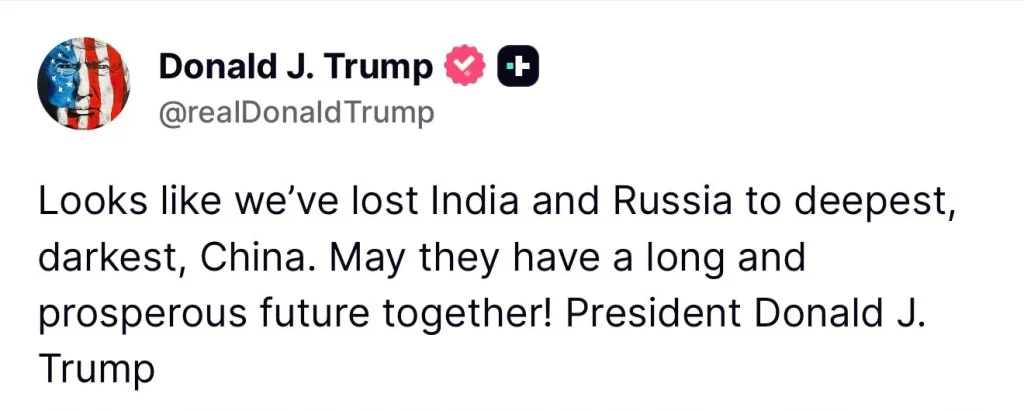
Modi and Putin’s close interactions drew attention, with photos showing them in deep conversation. India’s ties with Russia remain strong, fueled by cheap oil imports despite Western pressure. Relations with China, though strained by border issues, showed signs of thaw as Modi and Xi discussed trade. This comes as U.S. President Donald Trump imposed tariffs on India for its Russian energy deals, chilling Washington-Delhi relations. Trump took to X (formerly Twitter) to criticize the SCO gathering, tweeting that Modi’s coziness with Putin and Xi undermines American interests, calling it a “bad deal for the free world.” His post, posted shortly after the summit, highlighted growing rifts, pushing India closer to its Eastern partners.
Tech and Cultural Ties
AI cooperation got a nod, with plans for shared research and safety rules. Members agreed on equal AI access for all countries. Cultural exchanges flourished youth forums, art festivals, and tourism plans like eco-tours. A media and think tank forum in Zhengzhou before the summit set the tone, with over 400 guests swapping ideas. Volunteers from local universities added a youthful vibe. These softer ties help build trust, especially for newer members like Iran seeking broader connections.
Recent SCO Summits Timeline
The SCO has held key meetings lately, building to 2025.
| Year | Location | Key Outcomes |
| 2023 | Virtual (India) | Focused on digital cooperation |
| 2024 | Astana, Kazakhstan | Belarus joined; multipolar world push |
| 2025 | Tianjin, China | Development bank approved; AI roadmap; calls for new global order |
This table shows the progression, with each summit adding layers to the group’s role. The 2025 event amplified messages on sanctions relief and anti Western critiques.
Key Statements from Leaders
To capture the summit’s tone, here’s a quick look at standout remarks:
| Leader | Key Statement |
| Xi Jinping | “We must build a new global order prioritizing the Global South.” |
| Vladimir Putin | “The West’s dictatorship in world affairs must end; SCO offers a fair alternative.” |
| Narendra Modi | “India and Russia stand together in difficult times.” |
| Masoud Pezeshkian | “SCO should create financial tools to reduce sanctions’ impact and foster peace.” |
These quotes underscore the summit’s focus on reshaping global dynamics.
Global Impact of the Summit
The 2025 SCO Summit sent ripples worldwide. It showed non-Western powers banding together amid U.S.-China tensions. Trump’s tweet amplified this, framing the event as a challenge to American leadership.
Shift in Alliances
Xi, Putin, and Modi’s chummy moments like hand-holding photos signaled unity. Trump’s tariffs on India and Russia pushed them closer to China. The summit challenged NATO-like setups, positioning SCO as a counterweight. Iran’s active role in sanction talks added a layer, showing how the group could evolve into a shield for members facing economic isolation.
Border Disputes Among Members
Long standing border issues test the SCO’s unity. India and China have clashed over areas like Arunachal Pradesh and Ladakh, with a 2020 skirmish leading to deaths and strained ties. Steps in 2024, like a patrol agreement, eased some friction, and at the 2025 summit, Modi and Xi met on the sidelines to note progress on disengagement and set up new border mechanisms. They also agreed to restart flights and border trade, showing the SCO as a spot for quiet talks that build trust without direct mediation.
Kyrgyzstan and Tajikistan, meanwhile, have sparred over water and land in the Ferghana Valley, with flare ups in 2022. Earlier in 2025, their leaders signed a deal in March to end these disputes, joined by Uzbekistan in April to wrap up all territorial rows. The SCO’s roots in border resolution helped here the group’s regular meetings foster habits of dialogue that paved the way for this bilateral fix, even if the summit itself didn’t dive into it.
Overall, the SCO doesn’t solve these head-on but creates a steady space for members to chat and cool things down, as seen in these cases at the 2025 gathering.
Challenges Ahead
Differences linger. India and Pakistan spar over terrorism, while border spats between Kyrgyzstan and Tajikistan need work. The SCO avoids bilateral fixes, focusing on group goals. Pezeshkian’s proposals face hurdles, as implementing anti-sanctions tools requires buy-in from all, including cautious members like India.
Broader Reach
With observers and partners, the SCO eyes more members like Myanmar. Ties with ASEAN and the UN boost its voice. Analysts see it as a bridge for Global South nations seeking alternatives to Western-led groups. The summit’s emphasis on a new order, backed by Putin’s anti-Western stance and Xi’s vision, points to a more fragmented but diverse global landscape.
The event wrapped with a cultural performance, “Creating a Shared Future,” echoing the summit’s theme. Leaders left with fresh deals, setting the stage for Kyrgyzstan’s 2026 hosting.
Sources
AP News: “Modi and Putin affirm special relationship…” – For India-Russia ties and Modi’s visit.


