
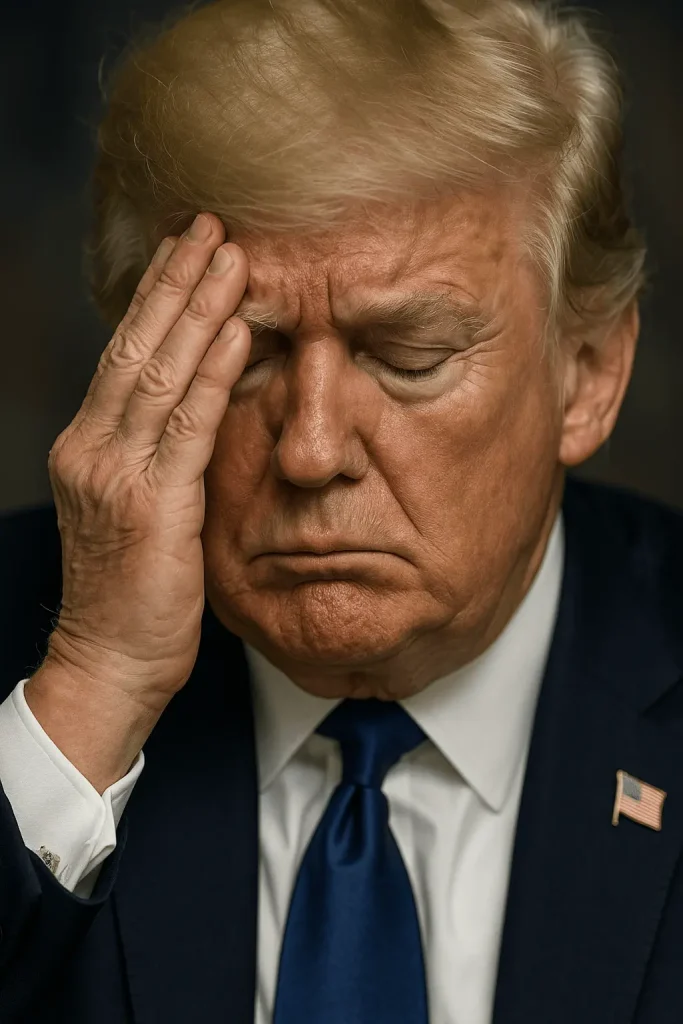
Donald Trump’s Mental Health: A Growing Topic of Public Concern
Since Donald Trump’s return to the presidency in January 2025, the question of his mental fitness has become a dominant theme in American and international media. His behavior, speech, and decision making style have been intensely scrutinized, with political opponents, health experts, and even some former allies raising pointed questions. The debate has only grown as new incidents and analyses make headlines, forcing the American public and the world to grapple with the implications for leadership, governance, and democracy itself.
A July 2025 opinion piece in USA Today captured the mood: “Whatever one thinks of Trump’s policies, the mounting evidence of confusion and volatility in his public statements cannot be ignored” (USA Today). These concerns are echoed not just by commentators but by clinicians and ethicists, sparking new debate over what it means to be mentally fit for the highest office in the land.
Donald Trump’s Mental Decline
Trump’s mental state became a national conversation as soon as he took office for a second term. Throughout 2025, his public appearances have featured notable lapses and erratic statements that critics and some observers interpret as warning signs of cognitive decline.
One high-profile moment occurred at a White House press conference in June, where Trump struggled to recall the names of several cabinet members and abruptly shifted topics mid-sentence, leading to visible discomfort among aides. Another incident, widely covered by networks including CNN and MSNBC, involved Trump launching into a prolonged and confused rant about windmills, Jeffrey Epstein, Gaza, and the European Union often with little logical connection between subjects (USA Today). Such moments have become more frequent, amplifying public doubts.
Meanwhile, conservative commentators like Rick Wilson have stated on the record that Trump’s “constant lapses and verbal aphasias” suggest he may not be able to serve out a full term (Economic Times). These statements have fueled bipartisan anxiety, with some Republicans quietly exploring contingency plans.
Trump and his supporters reject the idea of decline, framing such scrutiny as partisan attacks. The White House’s official physician released a statement in July declaring the president “medically and mentally fit,” though critics argue the report lacked transparency.
Trump and the Signs of Personality Disorder
Long before 2025, Trump’s personality traits were the subject of public fascination and professional concern. Psychologists and psychiatrists, constrained by the “Goldwater Rule” (which prohibits diagnosis from afar), have nonetheless written extensively about observable behaviors. In the widely discussed book The Dangerous Case of Donald Trump, 37 mental health professionals outlined the potential dangers of Trump’s traits, including narcissism, impulsivity, and lack of empathy (PMC Article).
Key signs noted in public analyses include:
- Grandiosity: Trump frequently claims unmatched expertise in diverse fields, often to the exclusion of expert advice.
- Lack of Empathy: Numerous reports document his apparent disregard for the suffering of others, especially in adversarial contexts.
- Impulsivity: From sudden policy reversals to inflammatory social media posts, Trump’s tenure has been marked by rapid, unpredictable decisions.
- Sensitivity to Criticism: Trump is quick to lash out at perceived slights, often escalating conflicts rather than seeking resolution.
Dr. John Gartner, a clinical psychologist formerly at Johns Hopkins, has publicly asserted that Trump shows signs of malignant narcissism, a term describing an extreme mix of narcissism, paranoia, antisocial traits, and aggression. While such claims are controversial and not universally endorsed—there is a growing body of commentary and open letters urging full neurological and psychiatric evaluation (Alternet).
The Dangerous Case of Donald Trump
The Goldwater Rule remains hotly debated. Many clinicians feel ethically bound not to make diagnoses without examination, yet others argue that public figures with massive power present a unique case. The editors of The Dangerous Case of Donald Trump argue that mental health professionals have a “duty to warn” society if a leader’s behavior threatens public welfare (PMC Article).
Their thesis is not that Trump meets specific diagnostic criteria from a distance, but that the cumulative weight of his public behavior grandiosity, impulsivity, vengefulness, conspiratorial thinking may endanger the stability of governance. These arguments have found an audience not just among mental health professionals, but with policymakers and voters, especially after Trump’s more erratic moments in 2025.
Critics of the book, including some prominent psychiatrists, caution that politicizing mental health risks undermining both medical ethics and democracy. They urge caution, transparency, and a focus on observable behaviors rather than armchair diagnosis.
Impact on Public Policy
The debate over Trump’s mental state has tangible policy implications. Some of the most widely discussed:
Unpredictable Foreign Policy:
Allies and adversaries alike have struggled to read the administration’s signals. In 2025, abrupt policy shifts such as threats to withdraw from NATO exercises and surprise outreach to controversial leaders have been interpreted by diplomats as evidence of erratic decision-making, increasing global instability.
Domestic Governance:
Within the U.S., internal administration leaks describe a White House environment where staffers compete to manage the president’s moods and attention span. Decision-making reportedly relies on simple, visual briefings and staffers who are adept at steering Trump away from impulsive announcements.
The 25th Amendment and Succession Anxiety:
Increasingly, political observers have discussed the 25th Amendment, which allows for removal of a president deemed “unable to discharge the powers and duties of his office.” While there’s no formal action yet, lawmakers from both parties have referenced it more frequently in interviews and off-the-record conversations.
Public Communication:
Trump’s speeches and social media posts remain a source of both fascination and alarm, with some analysts pointing to the mix of bombastic rhetoric and apparent confusion as a key reason why public trust in leadership is fluctuating.
Psychological Diagnoses and Professional Analyses: A Divided Field
The professional mental health community is divided. Some, like Dr. Bandy X. Lee (Yale), have led coalitions warning that Trump’s behavior is “dangerous.” Others, including Dr. Allen Frances, argue that labeling Trump with a personality disorder “misses the point”—his conduct may be harmful, but diagnosis should remain clinical, not political.
A 2018 article published in the Journal of the American Academy of Psychiatry and the Law concluded that, while Trump exhibits many “maladaptive” traits, public diagnosis is fraught with ethical problems (PMC Article). The article emphasized that leadership stress and aging can contribute to what may look like psychiatric symptoms without meeting full criteria for a disorder.
Some professionals, citing increased public incidents of confusion or rambling, argue for a formal independent evaluation. Others believe the American electorate, not clinicians, should be the ultimate judge.
The Latest News: Summer 2025 Developments
Several recent events have further inflamed public debate:
- Windmills, Epstein, and EU Rant: In July 2025, Trump delivered a rambling monologue conflating energy policy, conspiracy theories, and foreign relations. Commentators across the political spectrum described the speech as “alarming” and “disjointed” (USA Today).
- Confusion in Public Appearances: On multiple occasions, Trump has misidentified staffers, appeared to forget the context of meetings, or repeated the same anecdotes several times in one speech (Alternet).
- Health Transparency: Calls for Trump to undergo and publish results of a full neurocognitive assessment have intensified. The White House has so far refused, citing privacy and political motivations behind the requests.
Public Reactions: The Divided American Response
Public reaction is polarized along familiar political lines. Supporters argue that attacks on Trump’s mental health are politically motivated, dismissing them as “fake news.” They point to his stamina at rallies and assertive social media presence as evidence of vigor. Detractors, meanwhile, see every new speech and gaffe as proof that concerns are justified.
Social media hashtags like #FitToLead and #25thAmendmentNow trend regularly after controversial appearances. Meanwhile, late-night shows and editorial cartoons lampoon the president’s more unusual statements, fueling a cultural conversation about age, cognition, and leadership.
Conclusion: Leadership, Democracy, and the Limits of Diagnosis
The question of Donald Trump’s mental health is no longer confined to fringe speculation it is a mainstream issue that touches politics, ethics, and the future of governance. As Trump continues his term, Americans and the world watch closely, weighing the evidence, the expert commentary, and the risks to policy and democracy.
Whether calls for clinical evaluation or even invocation of the 25th Amendment will come to pass remains to be seen. What is certain is that the debate itself will shape public discourse and perhaps history for years to come.


