
Introduction
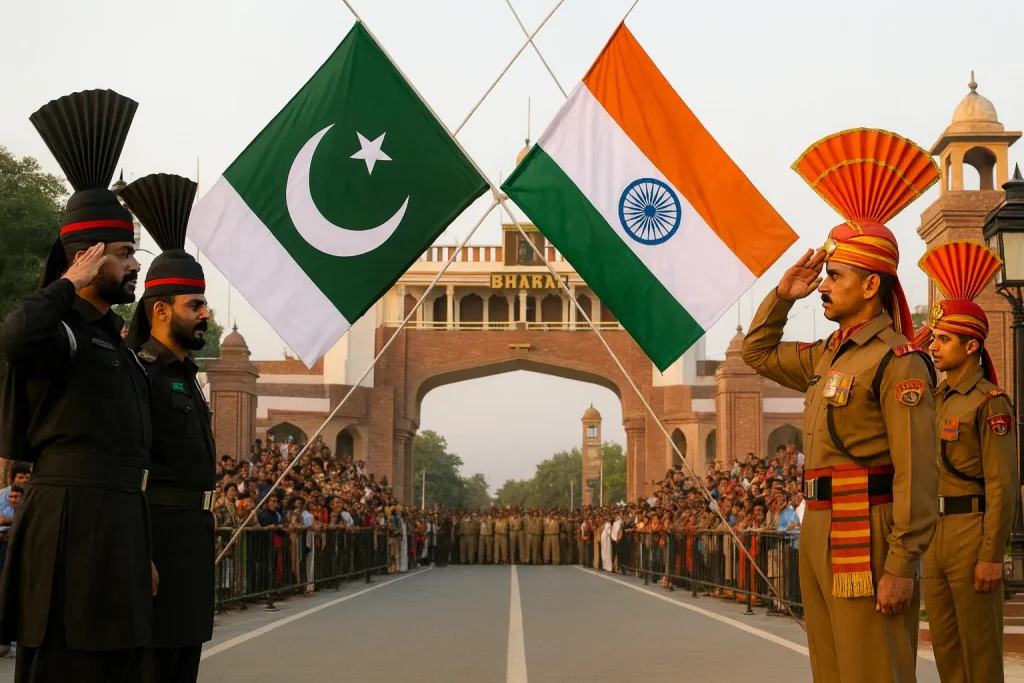
Two nations, born from the same subcontinent, have been locked in a rivalry that has defined South Asian geopolitics for over 75 years. The pakistan india conflict traces its roots to the traumatic events of 1947, when British India was divided into the Dominion of India and the Dominion of Pakistan amid widespread violence and displacement. This partition, driven by religious and political divides, set the stage for enduring tensions, particularly over the disputed region of Kashmir. The pakistan india split not only redrew maps but also sowed seeds of mistrust that have led to multiple wars, ceasefires, and ongoing skirmishes along the pakistan india border.
At the heart of the india pakistan conflict lies the unresolved Kashmir dispute, a flashpoint that has triggered four major wars and countless incidents of cross-border terrorism. From the first clashes in 1947 to the nuclear-tinged standoffs of recent decades, the india and pakistan relations have oscillated between fragile peace and outright hostility. Geopolitical influences, including the roles of major powers like China and the United States, have further complicated the dynamics, turning the subcontinent into a strategic chessboard.
This article provides a comprehensive exploration of india pakistan history, delving into the major military confrontations, the influence of external actors in pakistan india china relations, modern crises such as asymmetric warfare and proxy conflicts, and the tenuous efforts toward peace. We will also analyze the 2025 conflict drawing from recent events, think tank reports, and analyses to illustrate the risks of escalation in a nuclear age. By examining the pakistan india war history, including air battles and dogfights, and projecting into a tense future, this piece aims to offer insights into one of the world’s most volatile rivalries. Whether you’re searching for details on the india vs pakistan war, the pakistan vs india border disputes, or the latest news about india pakistan, this deep dive covers it all.
The Seeds of Conflict: The 1947 Partition and its Bloody Aftermath
The foundation of the pakistan india conflict was laid in the chaotic partition of British India in 1947, a process that reshaped the subcontinent and ignited decades of animosity. The “Two-Nation Theory,” championed by Muhammad Ali Jinnah and the Muslim League, posited that Hindus and Muslims constituted separate nations deserving independent homelands. This ideology gained traction amid rising communal tensions during World War II, as the British sought to exit their colonial holdings swiftly.
The partition, formalized by the Indian Independence Act of 1947, divided British India into Hindu-majority India and Muslim-majority Pakistan (comprising West and East Pakistan, the latter becoming Bangladesh in 1971). The Radcliffe Line, hastily drawn by British civil servant Sir Cyril Radcliffe, demarcated the borders, often splitting communities and farmlands arbitrarily. What followed was one of history’s largest mass migrations: an estimated 14-18 million people crossed borders, fleeing religious persecution.
The violence was staggering. Communal riots erupted across Punjab and Bengal, resulting in estimates of 200,000 to 2 million deaths. Trains arrived at stations filled with corpses, and villages were razed in retaliatory attacks. Women faced widespread abductions and assaults, leaving scars that persist in collective memory. The formation of pakistan and india was thus marred by bloodshed, fostering deep seated resentments.
Immediate disputes arose over princely states, semi-autonomous regions allowed to choose accession to either nation. Jammu and Kashmir, a Muslim majority state ruled by Hindu Maharaja Hari Singh, became the epicenter. Singh initially sought independence but acceded to India amid tribal incursions from Pakistan, sparking the first major clash. This event encapsulated the pakistan india split’s enduring legacy: territorial claims intertwined with identity, religion, and power.
The partition’s aftermath extended beyond violence. Economic disruptions, refugee crises, and asset divisions strained nascent governments. India’s secular vision clashed with Pakistan’s Islamic identity, fueling ideological divides. Today, the india and pakistan conflict continues to echo these origins, with the Kashmir issue symbolizing unresolved grievances from 1947. The geopolitical implications have drawn in global powers, shaping the trajectory of south Asian stability.
Understanding the Battlefield: A Geopolitical Map of the India-Pakistan Border
To grasp the india pakistan conflict, one must visualize the contested terrain along the pakistan india border. This 3,323-kilometer frontier, one of the world’s most militarized, stretches from the Arabian Sea to the Himalayas, encompassing deserts, plains, and glaciers. For those searching “pakistan india map” or “pakistan india on map,” imagine a detailed geopolitical chart highlighting key zones of contention, particularly in Kashmir.
A high-quality map of the region would show the International Border (IB), the officially recognized boundary running from Gujarat/Rajasthan in India to Sindh/Punjab in Pakistan. Established post-partition, the IB spans about 2,300 km and is heavily fortified with fences, floodlights, and patrols to curb smuggling and infiltration.
Northward, the map transitions to the Line of Control (LoC), a 740-km de facto border in Jammu and Kashmir, established by the 1972 Simla Agreement following the 1971 war. Not an international border, the LoC is a ceasefire line from the 1949 Karachi Agreement, highly militarized with over 500,000 troops on both sides. It snakes through rugged mountains, serving as the primary site for border skirmishes, artillery duels, and infiltrations. Frequent violations of the pakistan india ceasefire highlight its volatility.
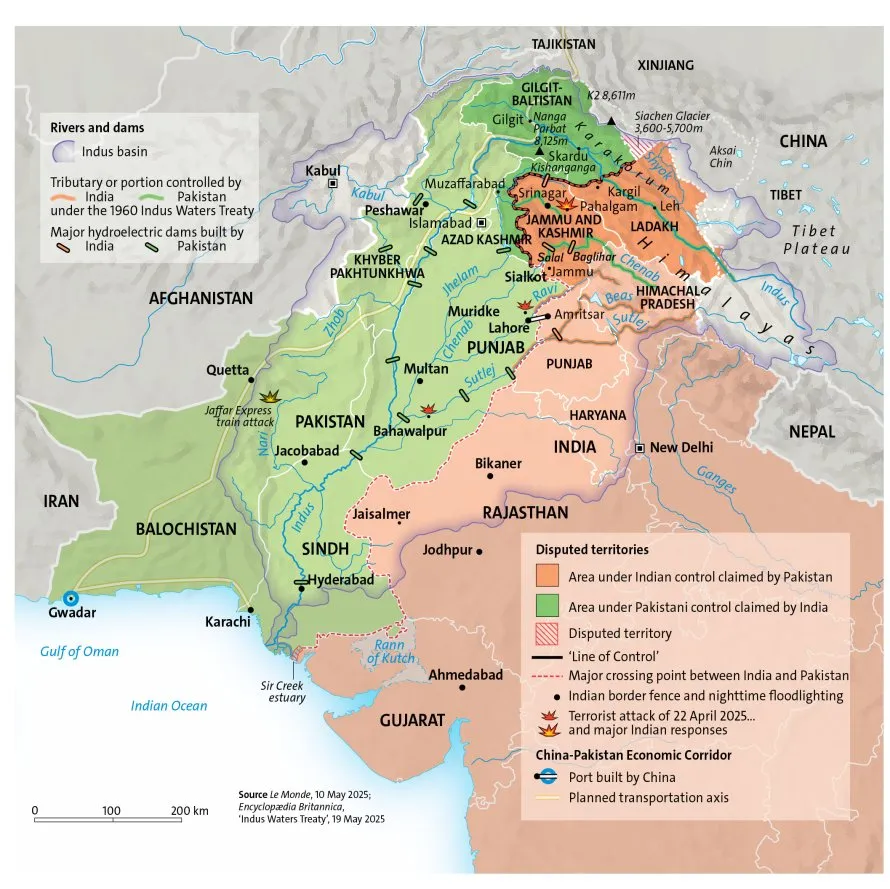
Further north, the map illustrates the Actual Ground Position Line (AGPL) in the Siachen Glacier region, extending about 110 km from NJ9842 (the LoC’s northern terminus) to Indira Col. This unmarked line emerged from the 1984 Operation Meghdoot, where India preempted Pakistani advances. Known as the world’s highest battlefield, Siachen’s control is vital for strategic oversight of surrounding valleys.
To the east, the map would depict Aksai Chin, a barren plateau controlled by China but claimed by India as part of Ladakh. Administered by China since the 1962 Sino-Indian War, it covers 38,000 sq km and hosts key highways linking Xinjiang and Tibet. This tri-junction underscores pakistan india china intersections.
Control over these areas is crucial due to water resources the Indus River system originates here, vital for agriculture in both nations strategic high ground for military dominance, and symbolic importance tied to national pride. The mapa india pakistan reveals how geography amplifies the india pakistan border disputes, turning natural features into battlegrounds. Recent conflicts, including the 2025 crisis, have seen intensified activity along these lines, with air and ground forces clashing over strategic points.
For clarity, here’s a table summarizing key border segments:
| Border Segment | Length (km) | Description | Significance |
| International Border (IB) | ~2,300 | Recognized boundary from Gujarat to Punjab | Main trade and migration route; heavily fenced |
| Line of Control (LoC) | ~740 | Ceasefire line in Kashmir | Primary flashpoint for skirmishes and terrorism |
| Actual Ground Position Line (AGPL) | ~110 | In Siachen Glacier | Highest battlefield; strategic oversight |
| Aksai Chin (disputed with China) | N/A (area: 38,000 sq km) | China-controlled, India-claimed | Links to broader geopolitical tensions |
This visual context is essential for understanding the pakistan india map dynamics, especially in light of modern escalations involving advanced weaponry.
A History of War: Analyzing the Major India-Pakistan Military Confrontations
The india pakistan war history is marked by four major conventional conflicts, each escalating the rivalry and reshaping regional power balances. These wars, often centered on Kashmir, highlight the enduring pakistan india conflict.
The First Kashmir War (1947-1948): The Fight for the Princely State
Mere months after independence, the first india pakistan war erupted over Jammu and Kashmir. In October 1947, Pashtun tribesmen, backed by Pakistani forces, invaded Kashmir to force its accession to Pakistan. Maharaja Hari Singh, facing rebellion, signed the Instrument of Accession with India on October 27, prompting Indian troops to airlift into Srinagar.
The war saw fierce battles in the valleys and mountains. Indian forces pushed back invaders, capturing key areas like Baramulla, but Pakistan controlled northern regions (now Azad Kashmir and Gilgit-Baltistan). By 1948, both sides sought UN intervention, leading to a ceasefire on January 1, 1949. The UN Resolution 47 called for a plebiscite, never held due to disputes over demilitarization. Casualties numbered around 1,500 Indian and 3,000 Pakistani soldiers, with the LoC emerging as the division line. This war solidified Kashmir as the core of india and pakistan conflict.
The 1965 War: A Widescale Conflict with a Stalemate
Tensions boiled over again in 1965 with Operation Gibraltar, Pakistan’s attempt to incite insurgency in Kashmir by infiltrating guerrillas. When this failed, Pakistan launched armored assaults in August, aiming to cut off Kashmir from India.
The war expanded to Punjab and Rajasthan, featuring large tank battles like the Battle of Phillora. India countered with offensives toward Lahore and Sialkot, nearly capturing Lahore. Air forces clashed in pakistan india air fights, with notable dogfights over the skies. The conflict ended in a UN-mandated ceasefire on September 23, 1965, after 17 days, with both sides claiming victory but achieving stalemate. Casualties: ~3,000 Indian, ~3,800 Pakistani. The Tashkent Agreement restored pre-war lines, but unresolved issues persisted.
The 1971 War: The Conflict That Created Bangladesh
The deadliest pakistan india war stemmed from Pakistan’s internal crisis. In March 1971, West Pakistan suppressed East Pakistan’s (now Bangladesh) autonomy demands, triggering a refugee crisis in India with 10 million fleeing atrocities.
India intervened on December 3, supporting Bengali Mukti Bahini guerrillas. The 13-day war saw Indian forces advance rapidly in the east, capturing Dhaka. In the west, naval blockades and air strikes dominated, including the sinking of Pakistani ships. Pakistan surrendered on December 16, with 93,000 POWs. Bangladesh emerged independent, humiliating Pakistan. Casualties: ~3,000 Indian, ~8,000 Pakistani. This war shifted balances, with India emerging stronger.
The 1999 Kargil War: Conflict in the Nuclear Age
Post-1998 nuclear tests, the Kargil War tested deterrence. In May 1999, Pakistani intruders occupied heights in Kargil, Ladakh, threatening Indian supply lines.
India launched Operation Vijay, recapturing peaks through infantry assaults and air support amid harsh terrain. Intense artillery duels and pakistan india air battles ensued, but nuclear fears limited escalation. By July 26, India declared victory, with ~500 Indian and ~400 Pakistani casualties. US pressure forced Pakistani withdrawal, exposing the risks of nuclear-shadowed conflicts.
Here’s a table timelines the wars:
| War | Duration | Key Events | Outcome | Casualties (Approx.) |
| First Kashmir War | Oct 1947 – Jan 1949 | Tribal invasion, Indian accession | Ceasefire, LoC established | India: 1,500; Pakistan: 3,000 |
| 1965 War | Aug-Sep 1965 | Operation Gibraltar, tank battles | Stalemate, Tashkent Agreement | India: 3,000; Pakistan: 3,800 |
| 1971 War | Dec 1971 | Bangladesh liberation, Dhaka surrender | Indian victory, Bangladesh created | India: 3,000; Pakistan: 8,000 |
| Kargil War | May-Jul 1999 | Intrusion in Kargil, Operation Vijay | Indian victory, withdrawal | India: 500; Pakistan: 400 |
These confrontations underscore the cyclical nature of india vs pakistan wars, setting the stage for more recent escalations like 2025.
The Geopolitical Chessboard: Role of the US and China in the Conflict
The pakistan india relations are not isolated; external powers like China and the US shape the geopolitical landscape, often exacerbating tensions.
The China Factor: Pakistan’s “All-Weather Friend”
China’s alliance with Pakistan serves as a counterweight to India. Since the 1960s, Beijing has provided military aid, including nuclear technology and missiles, bolstering Pakistan’s defenses. The China-Pakistan Economic Corridor (CPEC), part of the Belt and Road Initiative, invests $62 billion in infrastructure, linking Gwadar Port to Xinjiang and giving China strategic access to the Arabian Sea.
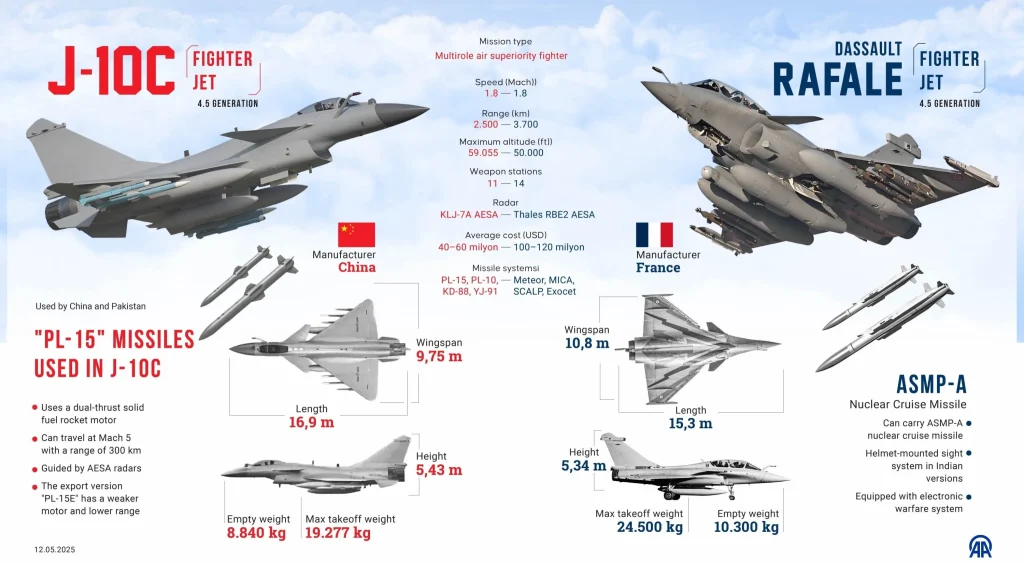
In pakistan india china dynamics, China blocks UN actions against Pakistan-based terrorists and supports Islamabad diplomatically on Kashmir. During crises, like the 2025 conflict, China provided intelligence and equipment support to Pakistan, including advanced jets like the J-10C. This “all-weather friendship” aims to contain India’s rise, making China a pivotal player in the india pakistan conflict.
The U.S. Factor: A Balancing Act Between Strategic Partners
The US has navigated a dual policy: allying with Pakistan for counter-terrorism and Afghanistan, while viewing India as a counter to China via the Indo-Pacific strategy. Post-9/11, billions in aid flowed to Pakistan, but mistrust grew over harboring militants.
In recent years, US-India ties strengthened with arms sales and Quad alliances, while US-Pakistan relations cooled over Afghanistan withdrawal. During the 2025 crisis, the US mediated de-escalation, pressuring Pakistan while supporting India’s stance on terrorism. This balancing act influences india and pakistan war scenarios, with US actions often tilting the scales.
Flashpoint 2025: A Case Study in Modern Escalation
The 2025 india pakistan war, a four-day intense conflict from May 7-10, marked a significant escalation, highlighting the role of advanced weaponry and geopolitical alliances. What began as a hypothetical scenario in pre-2025 analyses became reality, drawing from ongoing tensions and think tank warnings.
The spark ignited on April 22, 2025, with a major terrorist attack in Pahalgam, Indian-administered Kashmir, killing 26 civilians and attributed to Pakistan-based Jaish-e-Mohammed. This echoed previous incidents like Pulwama, prompting widespread outrage in India.
India’s response, dubbed “Operation Sindoor,” commenced in early May with cross-border missile and air strikes on alleged terror camps in Pakistan-occupied Kashmir. These strikes targeted militant infrastructure, but Pakistan denied the claims and retaliated swiftly.
Pakistan’s counter involved artillery barrages and aerial incursions across the LoC, leading to fierce pakistan india air battles. Central to these skirmishes were Chinese-supplied equipment in Pakistan’s arsenal. The Pakistan Air Force deployed J-10C fighter jets, manufactured by China’s Chengdu Aircraft Corporation, equipped with PL-15 long-range missiles. Pakistani officials claimed these jets shot down several Indian fighters, including Rafales and Su-30MKIs, using advanced radar feeds from Chinese surveillance planes like the KJ-500.
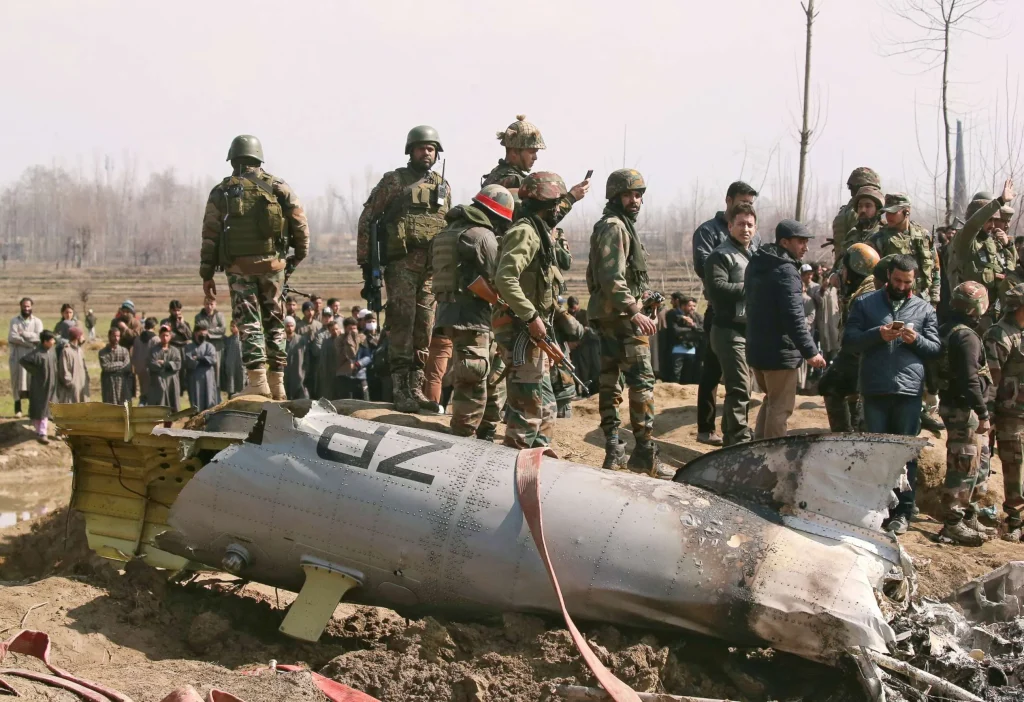
The aerial dogfights were intense, with pakistan india dogfight exchanges dominating the skies over Kashmir. Indian pilots in French-made Rafales engaged Pakistani J-10Cs and US-supplied F-16s, resulting in losses on both sides. Reports indicate Pakistan downed at least two to six Indian jets, showcasing the potency of Chinese weaponry in real combat for the first time. Other Chinese-Pakistani military equipment, such as Hongqi-9 air defense systems, played a role in intercepting Indian missiles, further exposing the integration of Beijing’s tech into Islamabad’s forces.
The crisis peaked with cyber attacks, drone strikes, and threats of nuclear escalation, bringing the nuclear-armed rivals to the brink. International diplomacy, spearheaded by the US and China, enforced a ceasefire by May 10, averting full-scale war. China urged restraint while bolstering Pakistan diplomatically, and the US condemned terrorism while facilitating talks.
Lessons from 2025: The fragility of nuclear deterrence was evident, with rapid escalation fueled by social media misinformation and advanced arms. The prominence of Chinese equipment, like the J-10C, boosted Beijing’s military export prospects and shifted regional power dynamics. This india attack pakistan episode underscores the need for robust crisis mechanisms to prevent future pakistan vs india wars.
Beyond the Battlefield: Asymmetric Warfare and Other Crises
Beyond conventional wars, asymmetric tactics define the pakistan india conflict.
The Siachen Glacier: The World’s Highest Battlefield
Since 1984, Siachen has been a frozen front. India’s Operation Meghdoot seized the glacier to prevent Pakistani encroachment, leading to ongoing standoffs at 20,000 feet. Avalanches and frostbite claim more lives than combat, with environmental costs mounting. The 2025 crisis saw renewed artillery exchanges here, highlighting its strategic value.
Cross-Border Terrorism and Proxy Wars
Pakistan’s alleged support for militants has fueled attacks like the 2008 Mumbai assaults, where Lashkar-e-Taiba gunmen killed 166 over three days. The 2019 Pulwama bombing killed 40 CRPF personnel, prompting Indian airstrikes. These incidents, including the 2025 Pahalgam attack, highlight proxy wars in the india pakistan conflict, often backed by external actors.
The Tenuous Path to Peace: A Timeline of Ceasefires and Dialogue
Peace efforts have been sporadic. The 1972 Shimla Agreement post-1971 war committed to bilateral resolutions, converting the ceasefire into the LoC. The 1999 Lahore Declaration aimed at nuclear confidence-building but was undermined by Kargil. The 2021 ceasefire recommitment reduced LoC violence, though fragile, and was tested in 2025. Back-channel talks show potential, but terrorism halts progress. Post-2025, renewed dialogues under US auspices offer cautious hope.
The Future of India-Pakistan Relations: What Lies Ahead?
Current india pakistan relations are frozen, with trade suspended and diplomacy minimal post-2025. Obstacles include Kashmir, terrorism, and domestic politics. Potential scenarios: continued stalemate amid economic pressures, accidental escalation from miscalculated strikes, or normalization via water-sharing agreements and trade resumption. External pressures from China and the US will shape outcomes, with the 2025 conflict serving as a stark warning.
Frequently Asked Questions (FAQ)
What is the main cause of conflict between India and Pakistan?
The primary cause is the Kashmir dispute, rooted in the 1947 partition and differing claims over the region.
How many wars have India and Pakistan officially fought?
Four major wars: 1947-48, 1965, 1971, and 1999 (Kargil), plus the 2025 crisis.
What is the strategic role of China in the India-Pakistan conflict?
China supports Pakistan militarily and economically to counter India, via alliances like CPEC and arms like J-10C jets.
Did India and Pakistan fight a war in 2025?
Yes, a four-day intense conflict in May 2025, sparked by a terror attack, involving air battles and resolved diplomatically.
Can India and Pakistan resolve the Kashmir dispute peacefully?
Possible through sustained dialogue and international mediation, but terrorism and mistrust pose challenges.
Sources
- Council on Foreign Relations (CFR) – Conflict Between India and Pakistan: https://www.cfr.org/global-conflict-tracker/conflict/conflict-between-india-and-pakistan
- Brookings Institution – India and Pakistan: Steps Towards Rapprochement: https://www.brookings.edu/articles/india-and-pakistan-steps-towards-rapprochement/
- Foreign Affairs – The Next War Between India and Pakistan: https://www.foreignaffairs.com/india/next-war-between-india-and-pakistan
- Stimson Center – Analysis of the 2025 India-Pakistan Crisis: https://www.stimson.org/2025/analysis-of-the-2025-india-pakistan-crisis/
- BBC – How real is the risk of nuclear war between India and Pakistan?: https://www.bbc.com/news/articles/c2e373yzndro


