
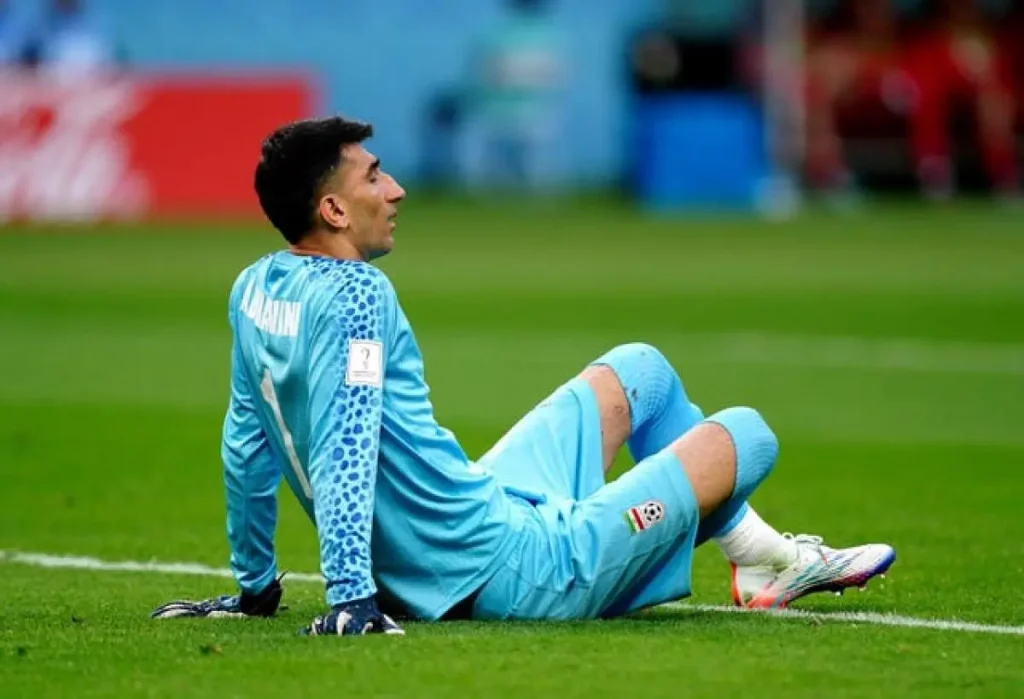
The Full Story Behind the Verdict
In a dramatic decision that has rocked Iranian football, Alireza Beiranvand, star goalkeeper of the Iranian national team and a leading figure at club level, has been officially suspended from all club and national matches for four months. The verdict, announced by the Appeals Committee of the Iranian Football Federation, comes at the end of one of the most controversial transfer disputes in recent years and has sent shockwaves through fans and the footballing community.
According to Varzesh3, the suspension is effective immediately and is not subject to delay or probation, marking a significant blow to both Beiranvand and his current club, Tractor.
The Background: A Controversial Transfer
The saga began last summer when Beiranvand, citing a clause in his contract, unilaterally terminated his agreement with Persepolis and completed a high-profile, much-debated transfer to Tractor S.C. Persepolis officials immediately challenged the legitimacy of the move, filing a formal complaint with the federation and demanding both financial compensation and disciplinary action against the player and his new club.
After months of heated debate, rumors, and legal arguments, the Appeals Committee delivered its final judgment, closing a chapter on one of the most talked-about cases in Iranian football history.
Key Findings from the Appeals Committee
The detailed ruling from the federation’s Appeals Committee highlighted several points:
- Unjustified Termination: Beiranvand’s termination of his Persepolis contract was deemed “unjustified.” The committee found that Persepolis had fulfilled its financial obligations, and Beiranvand failed to follow the required legal process—such as providing written notice and a 15-day grace period—before terminating.
- Timing and Process Flaws: The termination occurred before the contractual window allowed, with no formal warning given to the club, in violation of FIFA and federation regulations.
- Contract Clauses: The contract clause used by Beiranvand to terminate lacked legal clarity and did not set a proper deadline, making it invalid as a basis for unilateral termination.
- Compensation: Both Beiranvand and Tractor S.C. are now jointly liable for 274.375 billion IRR (about $4.7 million) in damages to Persepolis, an increase from the original 198 billion IRR set by the first committee.
- Rejection of Transfer Ban on Tractor: Persepolis’s request to ban Tractor from registering new players due to alleged “incitement” was rejected, as the committee found insufficient evidence of misconduct by Tractor S.C.
The Suspension: Details and Impact
Beiranvand’s four-month ban is a sporting, not a disciplinary, punishment. This means:
- Immediate Effect: The suspension is enforced from the date of the verdict with no probation, covering all official club and national team matches.
- National Team Implications: While rules allow for rare exceptions if the player is an “essential member” of the national team during the final phase of a major international tournament, Beiranvand will miss friendlies and preparatory matches—including the upcoming CAFA Championship, which is not recognized as a primary FIFA/AFC tournament.
- Financial and Sporting Fallout: Both Beiranvand and Tractor S.C. must pay the compensation and legal fees. The four-month absence will affect Tractor’s lineup at the start of the new season and leave a gap in the Iranian national team’s preparations for World Cup qualifiers.
Legal Analysis: Why Was the Suspension So Severe?
The committee’s legal reasoning is significant for future Iranian transfers:
- Breach of FIFA Article 14bis and Local Regulations: Unilateral termination without sufficient reason or proper process is not tolerated, with emphasis on contractual stability in global football.
- Precedent for Future Transfers: The ruling sends a strong message to players and clubs considering controversial contract clauses or sudden exits. If a player does not provide clear warnings and follow legal steps, they risk severe sanctions—including lengthy suspensions and heavy financial penalties.
Can Beiranvand Appeal or Play for the National Team?
Under current federation and FIFA rules, Beiranvand’s right to appeal is limited now that the Appeals Committee has issued a final ruling. The only remaining path would be to take the case to the Court of Arbitration for Sport (CAS) in Switzerland, should Beiranvand and Tractor choose to pursue that costly and time-consuming option.
As for his status with the national team, the only scenario where he could play during the ban is if Iran qualifies for the final phase of a top-tier international tournament (such as the World Cup)—and that tournament falls between club seasons. For now, he will be sidelined for all friendly and official matches, leaving Team Melli’s goalkeeping duties in question.
Reactions and What’s Next
The suspension has drawn wide attention on social media and sports programs, with fans, former players, and analysts debating its fairness and its impact on Iranian football. Many observers see this as a pivotal case that could shape contract negotiations and player rights in the country for years to come.
Persepolis has expressed satisfaction with the increased compensation and final enforcement of the suspension. Tractor, meanwhile, faces the challenge of replacing one of Iran’s top keepers for a crucial stretch of the season.


