
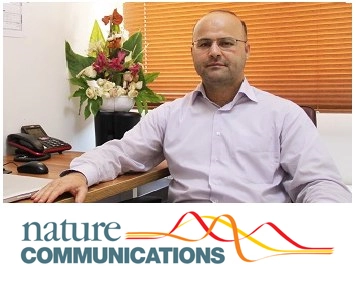
Iranian Scientist Helps Reveal Surface-Only Superconductivity in Topological Semimetal
A major advance in quantum materials has just been unveiled, thanks in part to Iranian physicist Dr. Mehdi Kargarian, Associate Professor at Sharif University of Technology. In a paper published in Nature Communications, Dr. Kargarian and an international team of researchers announced the discovery of a new form of superconductivity—one that exists only on the surface of a unique crystalline materialSharif Physicist Unveil….
The research, titled “Superconductivity and a van Hove singularity confined to the surface of a topological semimetal,” shines a spotlight on both Iran’s growing presence in global science and the future potential of quantum technologies.
What’s the Breakthrough? Superconductivity Only on the Surface
Traditionally, superconductivity—where electric current flows with zero resistance—occurs throughout the entire bulk of certain materials when cooled below a critical temperature. But Dr. Kargarian’s team found that in the crystal zirconium diarsenide (ZrAs₂), superconductivity emerges only on the material’s outermost atomic layers—the “top” and “bottom” surfaces—while the rest of the crystal behaves like an ordinary conductorSharif Physicist Unveil….
To prove this, the researchers used advanced electrical and spectroscopic measurements, observing what’s called a Berezinskii–Kosterlitz–Thouless (BKT) transition—the smoking gun of two-dimensional (2D) superconductivity—right on the crystal’s surface. This is the first clear demonstration that a 3D material can host a truly 2D superconducting state strictly confined to its surfaceSharif Physicist Unveil….
The Science: The Role of the Van Hove Singularity
One of the most remarkable aspects of this discovery is the role played by a van Hove singularity—a spike in the density of electronic states at a particular energy, creating a “traffic jam” of electrons on the surface. This pile-up of electronic states amplifies the interactions between electrons, making it much easier for them to pair up and create a superconducting current.
In ZrAs₂, the van Hove singularity appears only on the surface, not in the bulk of the material. This, the researchers argue, is the secret ingredient that makes surface-only superconductivity possible. The result: a quantum playground where new phases of matter can be explored and harnessed for future technologiesSharif Physicist Unveil….
What Are Topological Semimetals and Why Do They Matter?
The material at the heart of this discovery, zirconium diarsenide (ZrAs₂), belongs to a new family called topological semimetals. Unlike ordinary metals, these materials have unique electronic band structures protected by the symmetry of the crystal lattice. In a special subclass called Dirac nodal-line semimetals, like ZrAs₂, electronic bands cross each other along a line or loop in the material’s momentum space, producing exotic surface states.
These “topologically protected” surface states allow for quantum phenomena—such as the newly discovered surface superconductivity—that could not exist in conventional materials. As research into topological materials grows, discoveries like this position Iran and Sharif University at the cutting edge of global physics researchSharif Physicist Unveil….
Why Is This Discovery a Game Changer?
Superconductivity has long been a target for next-generation quantum computers, sensors, and lossless power transmission. But making topological superconductors—which are predicted to host robust quantum states ideal for fault-tolerant quantum computing—has proven extremely difficult.
Most previous approaches relied on artificially layering different materials to create a 2D superconducting region. Dr. Kargarian’s work, however, shows that nature itself can create such a state at the surface of a single, high-quality crystal. The discovery that superconductivity and topological order can coexist and interact on a surface opens new routes to finding and engineering materials with exotic quantum properties, such as Majorana fermions—theorized particles that are their own antiparticles and building blocks for stable quantum bits.
As the authors state, “The surface-confined nature of the van Hove singularity and associated superconductivity, realized for the first time, allows exploring the interplay between low-dimensional quantum topology and superconductivity in a bulk material without resorting to the superconducting proximity effect.” This means future scientists can study 2D quantum physics and possibly quantum computing schemes directly on real crystalsSharif Physicist Unveil….
Dr. Kargarian’s Role and Sharif University’s Global Contribution
Dr. Mehdi Kargarian, recognized for his theoretical expertise in condensed matter physics, was pivotal in interpreting the quantum mechanisms that confine superconductivity to the surface and tie it to the van Hove singularity. This project—combining experimental and theoretical teams from the U.S., China, Switzerland, and Iran—highlights Sharif University’s growing leadership in international research collaborations.
Sharif University celebrated the publication as a prestigious milestone, emphasizing Iran’s role in cutting-edge quantum research and the value of global scientific teamwork.
Implications: A New Era for Quantum Materials and Devices
The demonstration of surface-only superconductivity in a topological semimetal like ZrAs₂ provides an entirely new platform for:
- Fundamental research into the interplay of superconductivity and quantum topology.
- Quantum computing efforts, especially in the hunt for Majorana fermions and other exotic quantum states that could revolutionize information processing.
- Next-generation devices that harness low-dimensional quantum effects—since the superconducting layer is at the surface, it can be more easily accessed, manipulated, and integrated with other technologies.
Because this superconductivity is “protected” by the material’s topology, it could also be more robust against disorder—an essential feature for any real-world application.


